Feeding Frequency and Hunger Cues
Aim to feed your baby at least 8–12 times in a 24-hour period. Frequent feeding supports your baby’s nutritional needs and helps establish and maintain a healthy milk supply.
You may hear the general recommendation to “feed every 2–3 hours.” This isn’t because you might overfeed your baby—it’s to help ensure your baby isn’t underfed, especially in the early weeks when they’re still learning to cue clearly and your supply is being established.
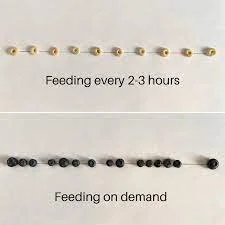
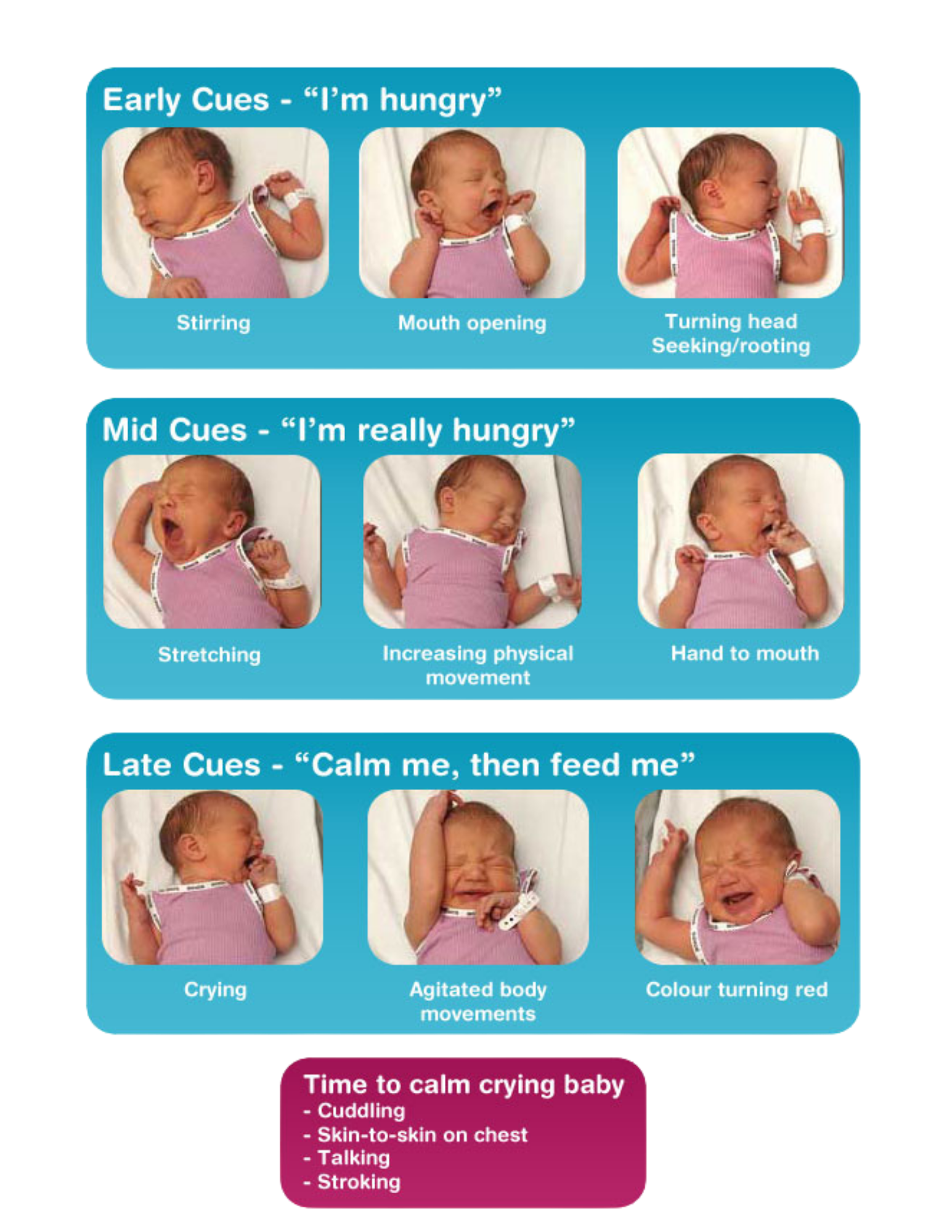
That said, feeding doesn't always follow a perfect schedule. Like the image with the cheerios versus the blueberries, your baby’s feeding pattern may be a little irregular at times. That’s normal. Rather than watching the clock, try to follow your baby’s cues—such as stirring, rooting, bringing hands to mouth, or becoming more alert—responding when they show signs of readiness to feed, even if it hasn't been a full 2–3 hours since the last feeding.
In the early days (until your baby has regained their birth weight and is showing consistent weight gain), it’s important to ensure they feed at least 8 times per day—even if that means waking them, including overnight.
Diaper Output: An Important Sign of Adequate Intake
Some weight loss is normal during the first week after birth, but weight loss and gain are only one part of the bigger picture. Diaper output is one of the best early indicators of adequate milk intake.
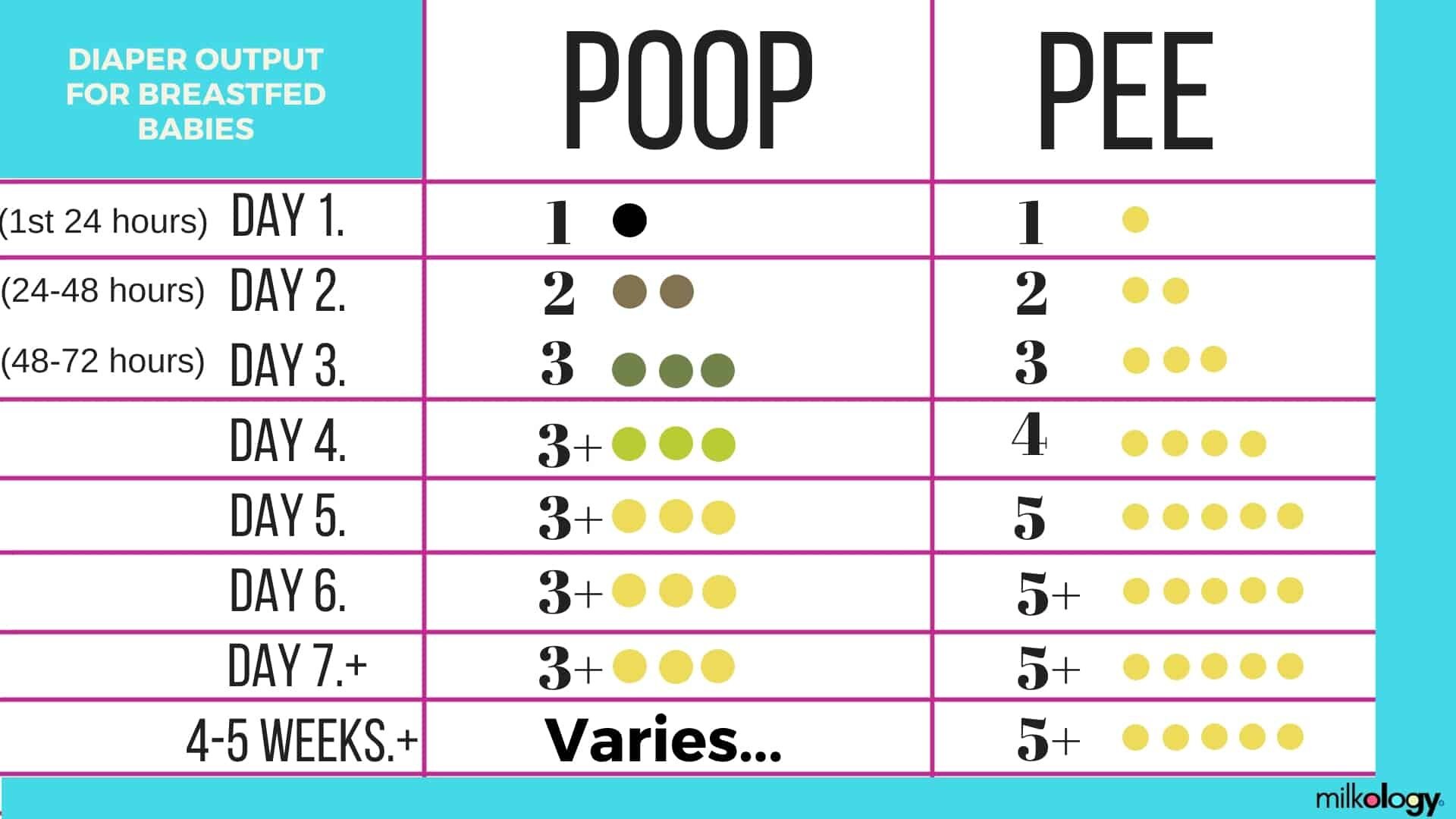
Output should increase each day (see the chart below), and stools should transition in color—from dark black meconium to greenish transitional stools, and then to the loose yellow stools typical of a well-fed breastfed baby. Meconium should be completely cleared by days 3–5.
Generally speaking, contentment between feeds can also be a reassuring sign of adequate intake. While some cluster feeding and frequent feeding are very normal, persistent feeds that never seem to end or needing to wake your baby for every single feed after the first few days can be signs that feeding should be assessed more closely.
Combined with feeding frequency, weight checks, and overall feeding behavior, diaper output helps us get a much clearer picture of how feeding is going.